

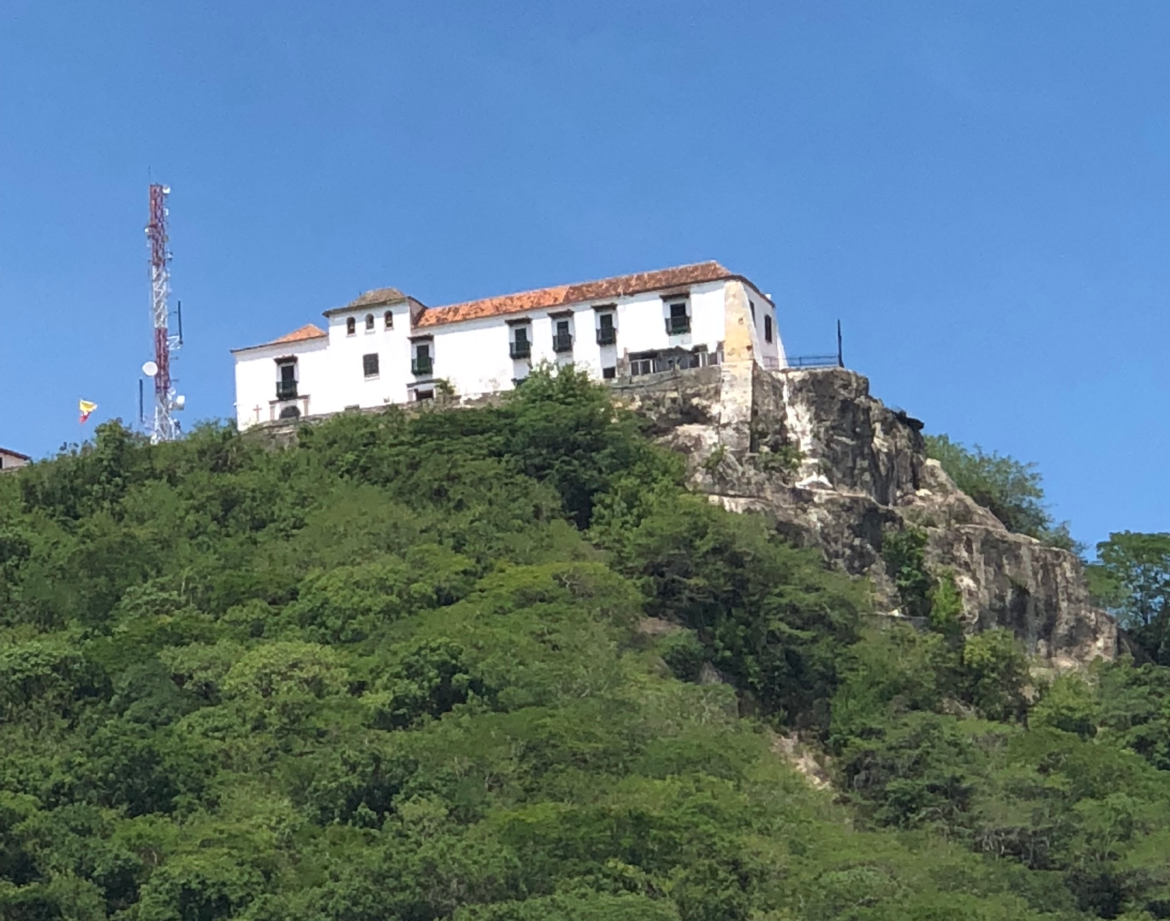
Cerro de la Popa
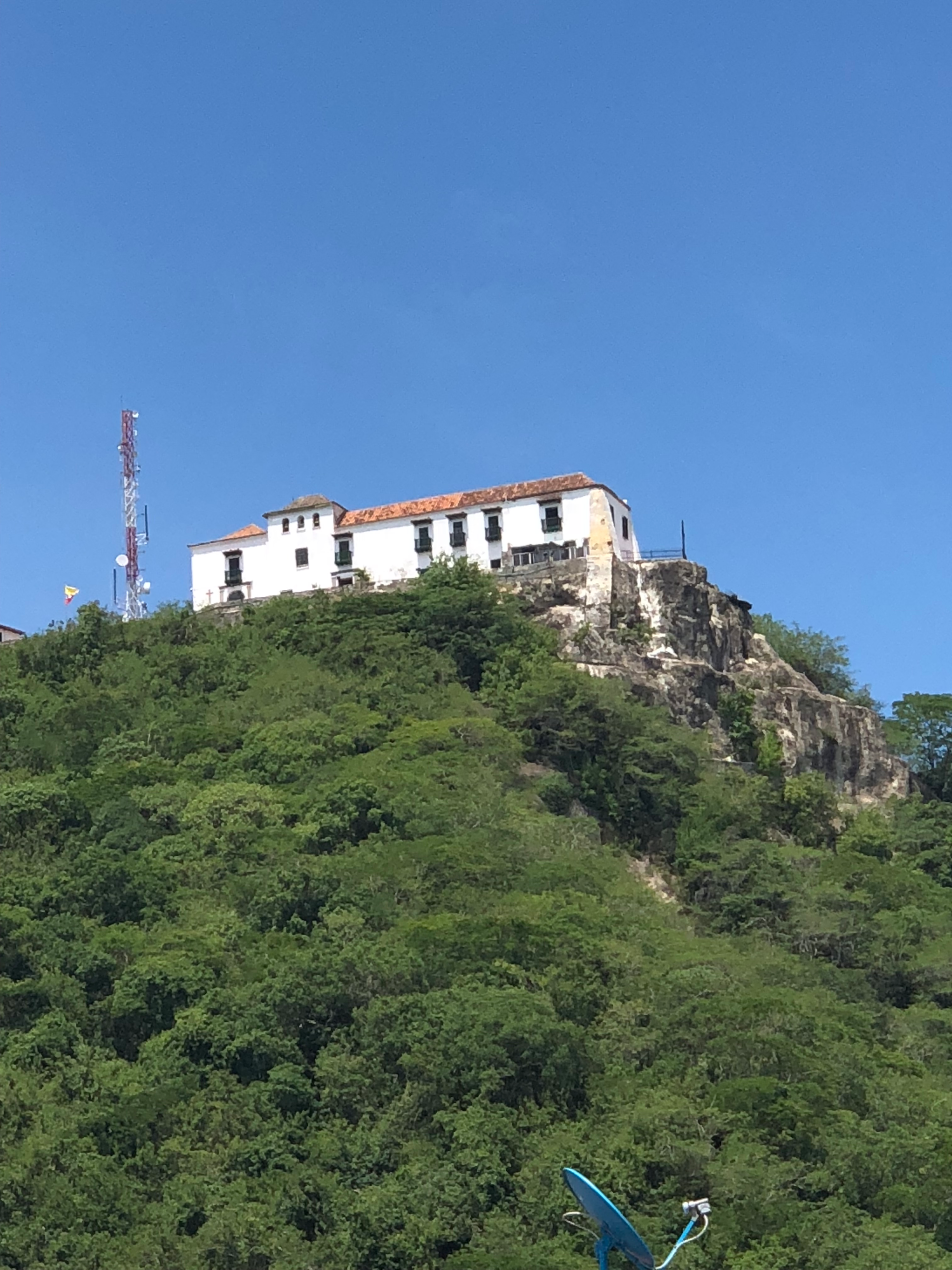
Cerro de La Popa – Cartagena’s Sacred Hill
Cerro de La Popa is the highest natural point in Cartagena, rising approximately 139–150 meters (450–490 feet) above sea level. Its name, which translates to “Hill of the Stern,” comes from early Spanish sailors in the 1500s who believed the hill resembled the stern (rear) of a ship emerging from the sea.
Spiritual and Cultural Significance
At the summit stands the Convent of Santa Cruz de la Popa, also known as the Sanctuary of Our Lady of La Candelaria, a revered site both spiritually and historically:
- Legend of its founding: In the early 1600s, the Spanish friar Alonso de la Cruz Paredes reportedly had a vision of the Virgin Mary urging him to build a monastery at the highest point in the city. Upon doing so, he expelled local pagan influences—symbolized by throwing a statue of a goat deity (Buziriaco) off the hill in a place now known as the “Devil’s Leap” (Salto del Cabrón).
- Built between 1606 and 1611, the convent became a religious anchor for the city and a defense lookout due to its panoramic vantage point.
Historical Role
Throughout Cartagena’s tumultuous colonial and independence history, the hill and convent played pivotal roles:
- Attacked by pirates including Francis Drake.
- Used as a strategic point during the Battle of Cartagena (1741).
- Briefly occupied by Simón Bolívar, the liberator of South America. A famous tale claims a cannonball fired from the Castillo San Felipe narrowly missed Bolívar at the convent.
- In the republican era, the convent was abandoned or used by the military until the Augustinian Recollects regained control in the 1960s.
Modern Religious Importance
- The Virgin of La Candelaria, enshrined in the convent, is Cartagena’s patron saint.
- In 1986, Pope John Paul II canonically crowned the image during his visit to Colombia, solidifying the site’s religious prestige.
Natural Landscape and Environmental Challenges
- Cerro de La Popa is home to tropical dry forest biodiversity, including native trees (like guayacán and dividivi), birds, and reptiles.
- It faces increasing threats from deforestation, informal settlements, erosion, and loss of wildlife corridors, making conservation efforts crucial.
Visiting Cerro de La Popa
Today, the site is a major tourist attraction, offering:
An immersive experience in the intersection of faith, folklore, and history.
Breathtaking panoramic views of Cartagena’s historic center, coastline, and port.
A glimpse into colonial religious architecture.